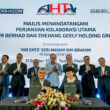




The Malaysian Communications and Multimedia Commission (MCMC) intends to develop a training program related to MCMC’s Technical Code as well as a structured telecommunications course, to improve the quality and reliability of information and communication technology (ICT) services in the country.
According to the Malaysian Technical Standards Forum Bhd, a Technical Code (TC) is a voluntary industry code that sets out the requirements and best practices to ensure network facilities, services and equipment are interoperable and safe.
A TC also acts as a harmoniser of differing industries and international standards through consensus among various stakeholders to suit the country’s requirements.
MCMC Chief Operating Officer Datuk Mohd Ali Hanafiah Mohd Yunus was quoted by Bernama saying that there is a provision in the Communications and Multimedia Act 1998 (CMA 1998) which states that various stakeholders can jointly develop industry technical codes that can be used by consumers and industries.
He spoke at the Capacity Development Conference 2023 (CDC23) saying that his side is also collaborating with the Manpower Department (JTM) to develop an industry-driven Technical and Vocational Education and Training (TVET) programmes, to be adopted by the Training Institute Industry for telecommunications-related courses.
ICT Workforce shortage an international issue
Meanwhile, he said the issue of workforce readiness and skilled workforce for the field of telecommunications and information and communication technology (ICT) does not only involve Malaysia, but many other countries also face the potential shortage of skilled workforce, which can have a negative impact on economic growth and national development efforts.
Citing a statement from the International Data Corporation (IDC), he said around 60 to 80% of organizations in Asia Pacific find it difficult or very difficult to fill vacancies in many roles in the Information Technology (IT) including security, developers and data professionals.
“About 53% of Asia Pacific organizations are taking three to four months longer than usual to fill a role in that technology compared to a year ago,” he said.
Referring to the MCMC initiative, Mohd Ali said there are 911 Digital Economy Centers (PEDi) that can be accessed by many communities across the country so far, with more than 25,000 PEDi entrepreneurs successfully undergoing training and adapting to the digital economy.
He said nearly RM4 million in research grants had been distributed under the previous Network Media Research Collaboration Program (NMRCP) and the current Digital Society Research Grant (DSRG) program, which generated more than 50 completed research projects.