
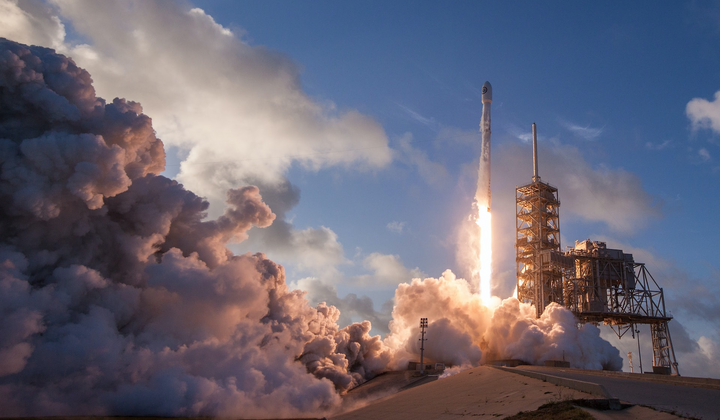
Minister of Science, Technology, and Innovation Chang Lih Kang announced yesterday (14 September) that Malaysia will finalise guidelines for its rocket launching capabilities by October, as the country strives to realise its space exploration ambitions.
The Malaysian government, operating through the National Space Agency (Mysat), has successfully deployed several of its satellites into space but currently lacks the technology for independent rocket launches.
Chang revealed that investors have already expressed interest in assisting Malaysia in developing its own rocket launching expertise, according to Malay Mail.
The forthcoming release of the guidelines next month is expected to catalyse more substantive discussions between potential investors and the Malaysian government.
“This initiative will be privately driven, but we aspire to establish a domestic rocket launching facility due to our strategically advantageous geographical location,” stated the minister. “Such an endeavor could significantly bolster our space industry.”
Currently, only eight countries worldwide possess the technology required for rocket launches, given the considerable expense associated with space missions.
Chang confirmed that interest in supporting Malaysia’s space capabilities has emanated from both private enterprises and governments, though he refrained from divulging specific names.
One of these potential entities could be SpaceX, the aerospace manufacturer and space exploration company owned by the high-profile tech billionaire Elon Musk, who is also the owner of Tesla.
In July, Musk engaged in a virtual meeting with Prime Minister Dato’ Seri Anwar Ibrahim, which ultimately led to the announcement of substantial investments from both Tesla and SpaceX.
Notably, during that same month, Tesla established its regional headquarters in Malaysia, and Starlink, a subsidiary of SpaceX, began offering satellite internet services in rural areas of the country.
Malaysia had been an early supporter of SpaceX when it was launched in 2009, as confirmed by Anwar, who attributed Musk’s preference for Malaysia over regional competitors to the country’s trust in the entrepreneur when many in the Western world did not.